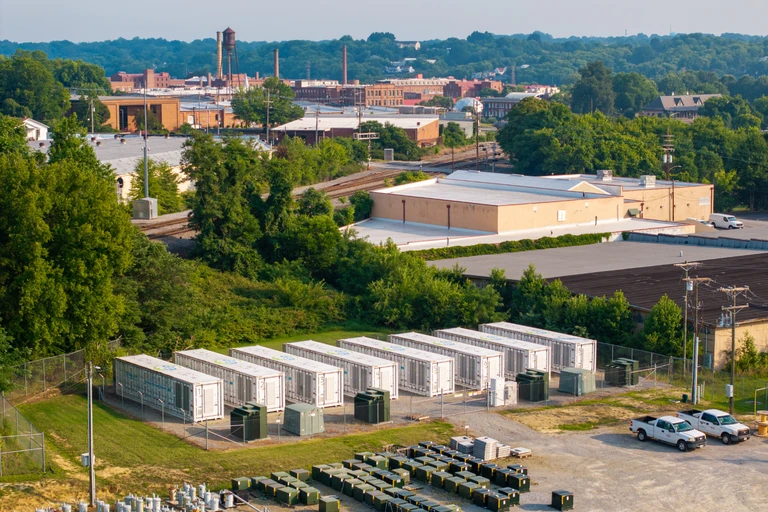
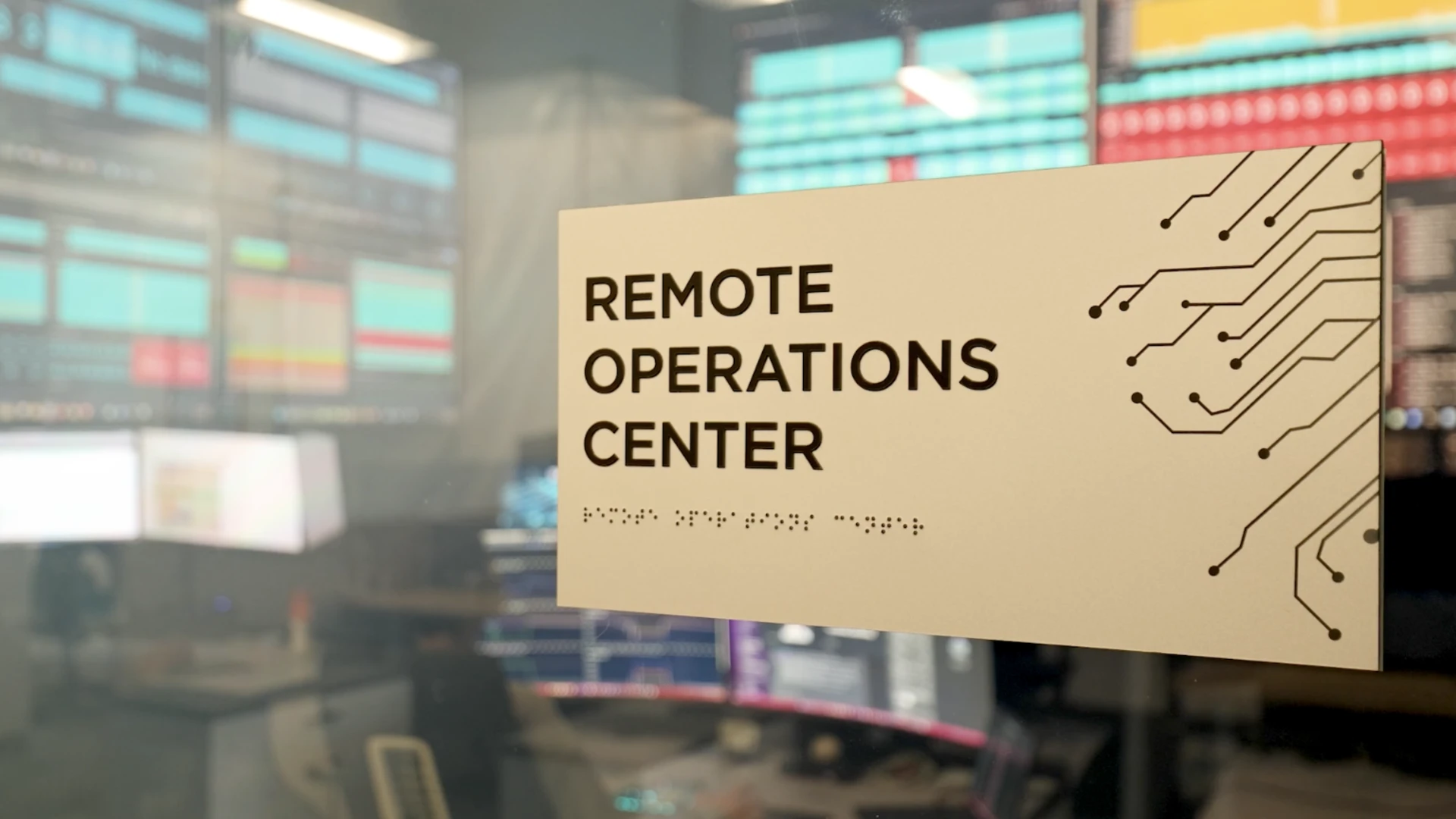
Utility-scale battery storage has become a cornerstone of grid reliability, which means the operators trusted to keep those assets online carry more commercial responsibility than ever. Inside the FlexGen Remote Operations Center (ROC), that reality drives a singular focus: availability. Battery energy storage system (BESS) availability is our North Star, because when BESS assets are online and ready to dispatch, customers maximize revenue and communities gain a more resilient grid.
Jonny Hoffman, FlexGen Manager of System Operations and Performance, takes us inside the ROC and explains what sets it apart from others in the industry.
How is FlexGen's ROC different from traditional remote operations centers?
Jonny: FlexGen's performance engineering team is embedded directly within the ROC, which means escalations that might take days in a siloed organization happen in minutes.
By identifying fault patterns and resolving root causes before they repeat, FlexGen's teams continuously decrease downtime rather than simply responding to it.
FlexGen consistently delivers 98% BESS availability by uniting operations, performance engineering, hardware partners, and advanced software into a single, coordinated system.
Why does an integrated operations and engineering feedback loop support battery storage performance?
Jonny: Traditional BESS remote operations centers sit downstream of engineering decisions. FlexGen's ROC is embedded directly into our engineering ecosystem. FlexGen doesn’t just operate assets, we’ve built the most robust energy management system (EMS) that controls and analyzes their performance, HybridOS.
Our ROC operators work with real assets, 24/7, across a wide range of operating conditions. Every issue, anomaly, or success they see is shared with FlexGen's software and engineering teams. This creates a tight, continuous loop of learning and iteration, where operational insights directly inform EMS improvements.
FlexGen's Innovation Lab extends this advantage further. It gives operators and engineers the ability to simulate, test, and validate changes in an in-person, controlled environment before deployment at a live site. This allows FlexGen to move from identifying a problem to issuing a fix faster than any operator dependent on a third-party EMS provider.
Instead of being stuck with software limitations, FlexGen can adapt quickly by refining controls, improving fault handling, and enhancing performance based on real-world data. The result is faster innovation, better system behavior, and higher availability across battery asset sites.
How do OEM relationships improve issue resolution?
Jonny: Every battery system will experience hardware issues over its lifetime. What separates strong energy storage operations teams from the rest is how quickly and effectively they respond.
FlexGen's ROC benefits from deep, established relationships with battery and equipment manufacturers through its supply chain and OEM partnerships. When an issue arises, ROC operators and performance engineers can precisely identify the problem and provide detailed, actionable data through an established escalation path, often accelerating resolution.
Supplier relationships give FlexGen leverage that many operators simply don’t have. Instead of waiting weeks for support, FlexGen can get technicians on site sooner and restore availability more quickly. For asset owners, that means reduced time from fault detection to field response, fewer extended outages, and better long-term asset performance.
How does FlexGen move from reactive monitoring to predictive operations?
Jonny: Many operations centers can tell you that something went wrong, but FlexGen's ROC is built to tell you what is about to go wrong — and to act before it does.
FlexGen's HybridOS software platform gives ROC operators and asset owners proprietary visibility into State of Charge (SoC) and State of Health (SoH) at the site and fleet level. FlexGen's SoH readings reflect actual operating conditions, rather than relying on simplified vendor degradation tables. Using actual conditions gives operators a precise, continuously updated picture of site health that is fundamental to effective battery asset management.
This data layer feeds directly into ROC operations. Custom and AI-generated alerts flag anomalies before they become outages. Automated maintenance actions, such as battery balancing and SoC calibration, can be scheduled during low-impact periods across multiple battery blocks simultaneously, reducing the operational burden on site teams while protecting availability during revenue-critical windows.
A remote operations center built for the future of energy
The FlexGen Remote Operations Center’s mission is to maximize availability. By achieving it, we also maximize customer revenue, grid reliability, and broader societal benefits like fewer outages and lower energy costs.
By embedding operations inside engineering, building direct OEM relationships, and deploying predictive software intelligence, FlexGen's ROC represents a fundamentally different model for how energy storage assets are managed.
Frequently Asked Questions
What is a BESS Remote Operations Center?
A Battery Energy Storage System (BESS) Remote Operations Center (ROC) is a centralized facility where trained operators monitor, manage, and respond to the performance of battery storage assets around the clock, typically across multiple sites simultaneously. A high-performing ROC combines real-time software visibility, engineering expertise, and established OEM relationships to maximize BESS availability and minimize downtime. The best ROCs don't just react to problems; they detect anomalies, evaluate root causes, and act before issues affect revenue. FlexGen operates its ROC from a state-of-the-art, NERC-compliant facility in Durham, NC, providing 24/7 remote monitoring, proactive troubleshooting, software upgrades, and full site handling for customers across multiple U.S. energy markets.
What does BESS availability mean?
BESS availability measures the percentage of time a battery energy storage system is online and capable of dispatching energy as required. It is impacted by both planned and unplanned outages, and the financial consequences of poor availability are significant. Based on FlexGen's internal analysis using 2023 market rates, a 5% difference in availability on a 100 MWh system can represent up to $1.5M per year in ERCOT, $1.2M in CAISO, and $1.0M in PJM. A poorly timed outage—for example, during an extreme weather event—can compound that dramatically: a single outage during August 2023 peak conditions would have had an $11.6M impact in ERCOT alone. Over a 20+ year asset life, the difference between sub-standard and optimized availability and operating range can represent a $90M NPV difference. FlexGen consistently delivers 98% availability across its fleet, compared to roughly 93% reported by its closest peers.
How does FlexGen's ROC differ from competitors?
Most remote operations centers sit downstream of the companies that build the software they use. That creates a structural gap: when something goes wrong, the path from problem to fix runs through multiple organizations, each with their own priorities and timelines. FlexGen is built differently.
FlexGen's ROC is integrated directly into its engineering ecosystem. FlexGen builds the HybridOS EMS that controls every site its operators monitor, which means operators and engineers work in the same organization, on the same assets, closing the loop in real time. Every fault, anomaly, or pattern that surfaces in the ROC becomes direct input for the software team. This feedback loop doesn't exist when your EMS provider and your operations provider are two separate companies.